
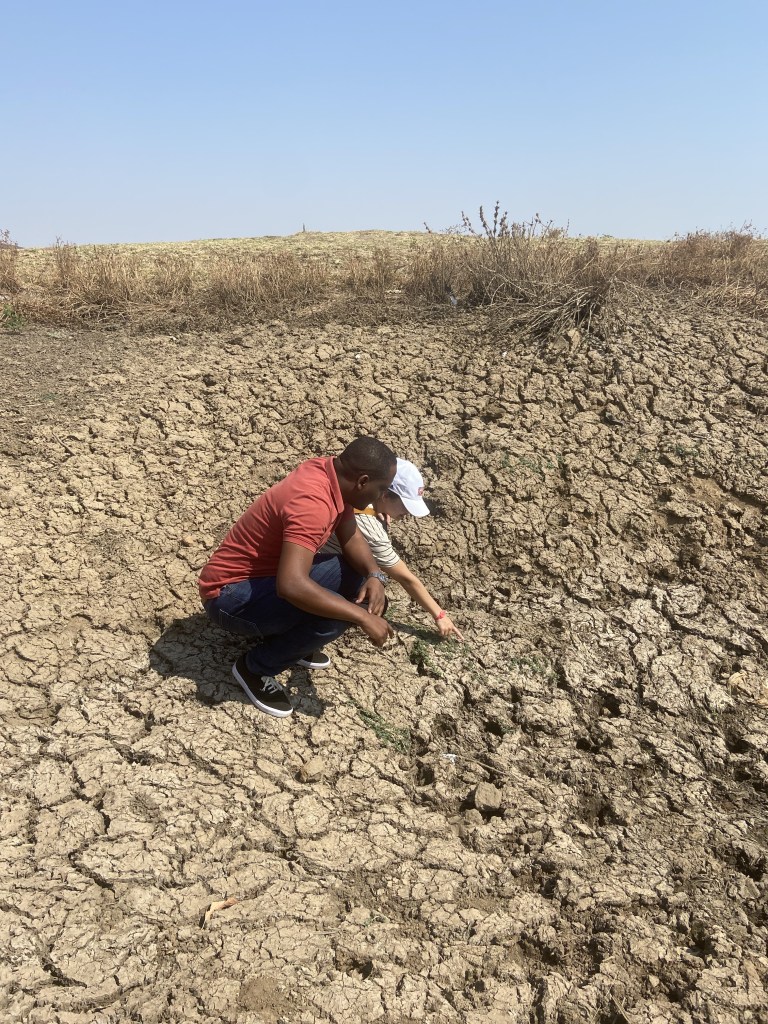
PhD and Postdoc positions
PhD
PhD Integrating ecology, mathematical modelling and social science to mitigate tropical disease risk – CLOSED
Despite decades of interventions, schistosomiasis remains a global public health challenge, delaying the achievement of the UN Sustainable Development Goal #3 “Ensure healthy lives and promote well-being for all at all ages”. This snail-borne disease impacts >250 million people worldwide. However, the control of schistosomiasis is not prioritized over many other diseases as mortality is the result of decades-long chronic infections and it occurs primarily in low-income rural settings in the Global South. In order to tackle this global public health crisis, there is an urgent need for effective interventions that local communities want to use for their health and wellbeing. We work in close collaboration with researchers at the National Institute of Medical Research (NIMR) in Mwanza, Tanzania.
This PhD position will focus on understanding and harnessing the seasonality of the intermediate host of the schistosomiasis cycle: snails. The chosen candidate will (1) collect field and lab data on snail populations across a period of two years in collaboration with researchers in Tanzania, (2) they will adapt and apply mathematical models (ordinary differential equations, ODEs) to better understand how seasonality impacts snail populations and infection outcomes, and (3) work closely with local communities to develop locally-ground intervention methodologies informed by data and model outcomes.
Applications should include the following information (all files besides your cv should be submitted in one single pdf file):
- a detailed CV including the months (not just years) when referring to your education and work experience;
- a letter of motivation (highlighting your past experiences and the value of interdisciplinary work in your career trajectory);
- the names and email addresses of two references who can provide letters of recommendation.
Postdoc
There are currently no available postdoc positions. If you are interested in applying for a fellowship to work in the SNAIL lab:
- NWO Talent Program (Veni Grant) for applicants of any nationality with PhD obtained in the last 3 years (pre-proposal due in September of each year)
- Human Frontier Science program for applicants of any nationality (some eligibility criteria exist) within 3 years of PhD conferral (letter of intent due in March of each year)
- Marie Curie Postdoctoral fellowship for applicants of any nationality with PhD at time of deadline (due around September each year).
- EMBO postdoctoral fellowship for applicants within two years of their PhD attained outside of the Netherlands (due July of each year).
Send inquiries to: n.c.starkloff@uva.nl
Masters and Bachelors internship projects
Are you an UvA biology student looking for an internship project for 2025?
I am recruiting 3-4 Masters (UvA Masters in Biological Sciences & Earth Sciences programs) and/or Bachelors (UvA Bachelors in Biology & Future Planets programs) students for 2025.
Projects you could do in my lab:
- Transmission risk of snail-borne diseases across the seasonal cycle in Tanzania: Land use change in Tanzania has led to an increase in habitat created for snails that can transmit tropical diseases to humans, livestock and wildlife. As a part of this study, you will investigate spatial and temporal risk points of transmission. This project will involve 1-2 trips to northwestern Tanzania to conduct field work and associated costs will be covered by the lab. If you are interested, it is important to consider that field work in the tropics can be an enduring process. MASTERS STUDENTS ONLY.
- Transmission risk of snail-borne diseases in the annual cycle of livestock farming in the Netherlands: Livestock farms here in the Netherlands provide habitat for snails that can transmit diseases to cattle and wildlife, and occasionally humans. As a part of this study, you will investigate spatial and temporal risk points of transmission in aquatic agricultural habitats. This is a new project, and you will help develop it. This project allows for field collection about a 20-minute by bike from Science Park.
- Sri Lankan-Dutch collaborative bachelors thesis project 2026: This thesis project focuses on topics in both the natural and social sciences and includes an eight-week visit to Sri Lanka. I will supervise three UvA Future Earth students in this research program, with the opportunity to carry out research in either the tea-growing hill country region or the eastern coastal region of Sri Lanka. You will develop a project on topics such as land use change, biodiversity loss, overfishing, climate change, land degradation, etc. This option is only available to UvA Future Planet Studies students and is a selective thesis program. Read this description and submit a motivation statement by 1 December 2025 to apply for this opportunity.
- Design a project: If you have a solid research idea in the realm of field biology, behavioral ecology, disease ecology, community ecology, urban ecology, forest ecology, tropical ecology, you are welcome to pitch it to me. If it is a good fit, I am happy to work with you to develop it. This could be a field, lab or computational project.
If you are interested in projects 1, 2 & 4, fill out this form.

 the SNAIL lab